

Energy and Plastic Waste Crisis Could Be Reduced via Waste-to-Energy
Published on 17 October 2017
Waste-to-energy is not a new concept, yet despite successful operations globally, it is often not on the radar of many governments as an option. This is unfortunate, as the opportunity exists to both effectively remove plastic pollution, while simultaneously supporting some of the local energy needs in the wake of the decommissioning of coal-fired generators. It can also simply help to fill the increased demand of a growing consumer population, and can even be made into road-ready fuel by smart technology like that of Australia’s Integrated Green Energy Solutions Ltd.
Plasticity Forum Attracts International Speakers for Discussion on Transforming Plastic Waste Into Valuable Resources
Published on 13 October 2017
Companies and governments play key roles inspire reduced waste, create new end markets, spur jobs, and improve environments vis-a-vis plastic pollution.
China's "National Sword" Policy Strikes the Plastics Circular Economy
Published on 19 September 2017
Global plastic waste resources which are being exported for recycling are now under threat from China’s new “National Sword” policy which is disrupting the region’s plastic scrap marketplace. Rather than creating doom, this change in circumstances offers new opportunities for both existing recyclers and new businesses which can mobilize domestic innovation, job creation and plastic resource recycling domestically in the countries where the waste is generated.
Sustainability Efforts Reshaping Some Brands’ Food Packaging
Published on 01 May 2017
Brand owners and major retailers are responding to consumer demands and increasingly stepping up to “do the right thing” environmentally as they publicly commit to sustainable food packaging. These initiatives are designed to reduce packaging waste and encourage a shift to the circular economy.
The goal of the circular economy – currently a better-known concept in Europe than in North America – is to move from our traditional take-make-dispose economy, to one that has a closed loop, where materials, nutrients and data are continuously repurposed. One impact of such a concept is that it encourages greater use of biopolymers and recycled content in all appropriate types of packaging, including in food and beverage packaging.

"Plasticity Light" on Facebook Live - Summary Session for the Public at Earth Day Texas
Published on 22 April 2017
Watch the “Plasticity Light” session, held on Saturday for the public at Earth Day Texas (April 22nd). You can view the 90min session on Facebook Live, starting at the 1hr 25min mark.
This was a summary of Plasticity, with a few of our conference speakers: Stuart Clark of FOY Group, Trish Hyde of the Australian Packaging Covenant, Rachael Miller of Rozalia Project, Alvaro De Marichalar, and Bob Grace, of RC Grace Ltd., and Doug Woodring, Founder of the Plasticity Forum.

Earth Day Texas Event in Dallas Brings Together Experts to Tackle Plastic Pollution at Scale
Published on 21 April 2017
Plastic is among the most common types of pollution on Earth and is rapidly making its way into the oceans. Research published in the journal Science estimated that at least 5.3 million tons of plastic debris entered the world’s oceans in 2010.
On Friday, several environmentalists, financial experts and companies that manufacture and use plastic will meet in Dallas to work on tackling plastic pollution and potentially slow that flow.
Plastic Opportunities for Change
Published on 15 April 2017
Whether or not the ocean and our waters upstream are drivers for needed improvements in plastic pollution reduction, the health of our communities, and the customers we all need, should be incentive enough to demand and encourage management to really focus on being an active participant in the circular economy. Plastic pollution is now on the top of many environmental agendas, as it directly impacts the abilities of cities to be resilient, and “smart.” Governments can facilitate circularity and waste avoidance, but it is the private sector which will thrive on it once some good case studies are promoted, scaled and replicated.

Our Plastic World: Policy and Legislation
Published on 02 April 2017
This is the third piece in a three-part series about recycling and the efforts of the” Plasticity Forum”:http://www.plasticityforum.com.
By now, you likely know a thing or two about Plasticity Forum. As plastic pollution continues, thinkers and entrepreneurs are grouping together to seek an end to one of human’s greatest dilemmas and to create new means for tidying up the planet.
Two weeks ago, we introduced you to the notions of economy and how plastic is recovered. Then, we talked about plastic’s design, and now, we’ll focus on legislation and policy. The time has come to examine what rules (if any) exist to stop plastic pollution from spreading across the globe….
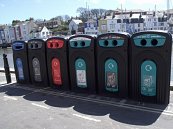
Plasticity Looks at the Next Life of Plastics
Gayle Putrich
Published on 03 July 2014
More often than not, debates about end-of-life problems with plastic results in industry vs. environmentalist finger-pointing, stalemates — and no viable solutions.
But not at the Plasticity Forum. The one-day event examining the future of plastic, held June 24 at Tribeca Rooftop in New York, brought together would-be opponents for a day of collaboration and discussion on how to treat plastic as a resource and not waste.
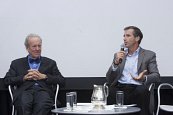
Plastic - If You Can Measure It, You Can Manage It
Published on 29 May 2014
Plastic has many great uses, due to its light weight, flexibility in molding, and durability – yet these are also its downfalls, particularly because it is difficult to create economies of scale for the many varieties of plastic that exist. In the US alone, estimates are that over US$8bn per year is ‘left on the table’ in the form of packaging waste alone, which does not get recycled.
Roughly 85% of the plastic used in products and packaging is not recycled, and this is a large, global opportunity – an opportunity for cleaning our country sides and waterways, while creating jobs and innovation.