




EU Rules and Supply Limits Test Asia’s Access to Key Export Markets as Plasticity Forum Returns to Malaysia for Solutions
Published on 08 October 2026 by Channel News Asia
Companies selling into Europe are about to find out whether their supply chains are ready for the rules. On 21 November, the European Union will ban plastic waste exports to non-OECD countries, and its new vehicle and packaging regulations will increasingly require recycled content in the products they sell. Just days before, on 16 and 17 November, the Plasticity Forum Kuala Lumpur (KL) 2026 will bring brands, manufacturers, plastic makers, and policymakers to M Hotel in Kuala Lumpur to ask how the region secures the materials it needs and stays competitive as the rules tighten.

Is ‘waste’ really a barrier to the circular economy?
Published on 23 April 2024 by China Daily
In 1967, in his Academy Award-winning role in The Graduate, Dustin Hoffman was told that the future is “plastics”. Today, plastic pollution is one of the top three environmental topics and challenges for all of our economies. Arguably, the “future” is how to recover all the plastic that stains our environment and waters today. However, one of the challenges for remediation and improvements is that many different stakeholders suggest that plastic recycling does not work and has never lived up to its promises, so trust has been lost across many international jurisdictions.
In contrast, and at the same time, many of the same stakeholders are suggesting that the world needs to move into circular economy systems for the preservation and reuse of materials instead of continuing to exploit virgin materials. This might be difficult to accomplish, but it is certainly possible to make significant strides in the direction of circularity, once our businesses and governments put their minds to it.
Recyclers Cringe as Southeast Asia Says It’s Sick of the West’s Trash
Published on 07 June 2019
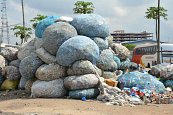
Within months, Malaysia, which has a sizable ethnic Chinese population, had replaced China as the world’s largest importer of plastic scrap. But this country, and others across the region, soon saw the waste as an environmental nightmare, and a heavy backlash has begun. With public support, some advocacy groups have urged officials to permanently ban the import of plastic waste.
But at a time when the world is awash in such plastic, some experts worry that this backlash could block the flow of raw material to Southeast Asia’s aboveboard recyclers and manufacturers — and raise the chances that plastic scrap will end up in rivers, oceans, dumps and illegal burn sites.

Plasticity Organizers Chose Malaysia as Event Site
Published on 03 September 2018
A presenter from United States-based Avery Dennison will be on hand to discuss how labels lend color, branding, bar code tracking and legally required information to packaging. However, even in packaging recycling processes, “much of the time, the label is removed, and discarded as waste.”
Avery Dennison indicates it has earmarked label waste as a top strategic challenge in its 2025 sustainability goals, and at the Labelexpo 2018 event in suburban Chicago, the company’s corporate display used panels made from 50 percent consumer label scrap.
"Reading the Tea Leaves" with Single Use Plastic
Published on 22 June 2018
On a daily basis, more people are impacted by trash and dirty water than by climate change. This is not to say that one problem is bigger than the other, but plastic pollution is one of the more complicated issues to solve as it is so widely dispersed.
Dirty water from trash impacts drinking water, hygiene, disease, tourism, and air pollution from open-pit burning of trash. It also impacts fishing, agriculture, maritime transport, and ecosystems on land and water, and the carrying of toxicity in broken-up micro plastic, which has entered the human food chain.
Vast Opportunities To “Circulate” Plastic as a Resource
Published on 25 October 2017
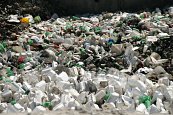
Those who lead the market with bring-back programs, “enlightened procurement”, reverse supply-chains and home “collection” programs will be well suited to inspire, recruit and engage communities.

Looping Plastic into the Circular Economy
Published on 20 October 2017
The recovery and circulation of plastic waste, however, also poses some large opportunities for the engaged leaders in business, innovation and policy that see this blight in our environment and waters continuing to grow. Those who lead in the use of bring-back programs, “enlightened procurement” for recycled content, and optimization of reverse supply-chains and home “recovery/collection” programs to complement deliveries, will be well suited to inspire, recruit and engage communities who now recognize unsustainability, but who may not know how to act on it efficiently themselves.

Energy and Plastic Waste Crisis Could Be Reduced via Waste-to-Energy
Published on 17 October 2017
Waste-to-energy is not a new concept, yet despite successful operations globally, it is often not on the radar of many governments as an option. This is unfortunate, as the opportunity exists to both effectively remove plastic pollution, while simultaneously supporting some of the local energy needs in the wake of the decommissioning of coal-fired generators. It can also simply help to fill the increased demand of a growing consumer population, and can even be made into road-ready fuel by smart technology like that of Australia’s Integrated Green Energy Solutions Ltd.

Plasticity Forum Attracts International Speakers for Discussion on Transforming Plastic Waste Into Valuable Resources
Published on 13 October 2017
Companies and governments play key roles inspire reduced waste, create new end markets, spur jobs, and improve environments vis-a-vis plastic pollution.

China's "National Sword" Policy Strikes the Plastics Circular Economy
Published on 19 September 2017
Global plastic waste resources which are being exported for recycling are now under threat from China’s new “National Sword” policy which is disrupting the region’s plastic scrap marketplace. Rather than creating doom, this change in circumstances offers new opportunities for both existing recyclers and new businesses which can mobilize domestic innovation, job creation and plastic resource recycling domestically in the countries where the waste is generated.
